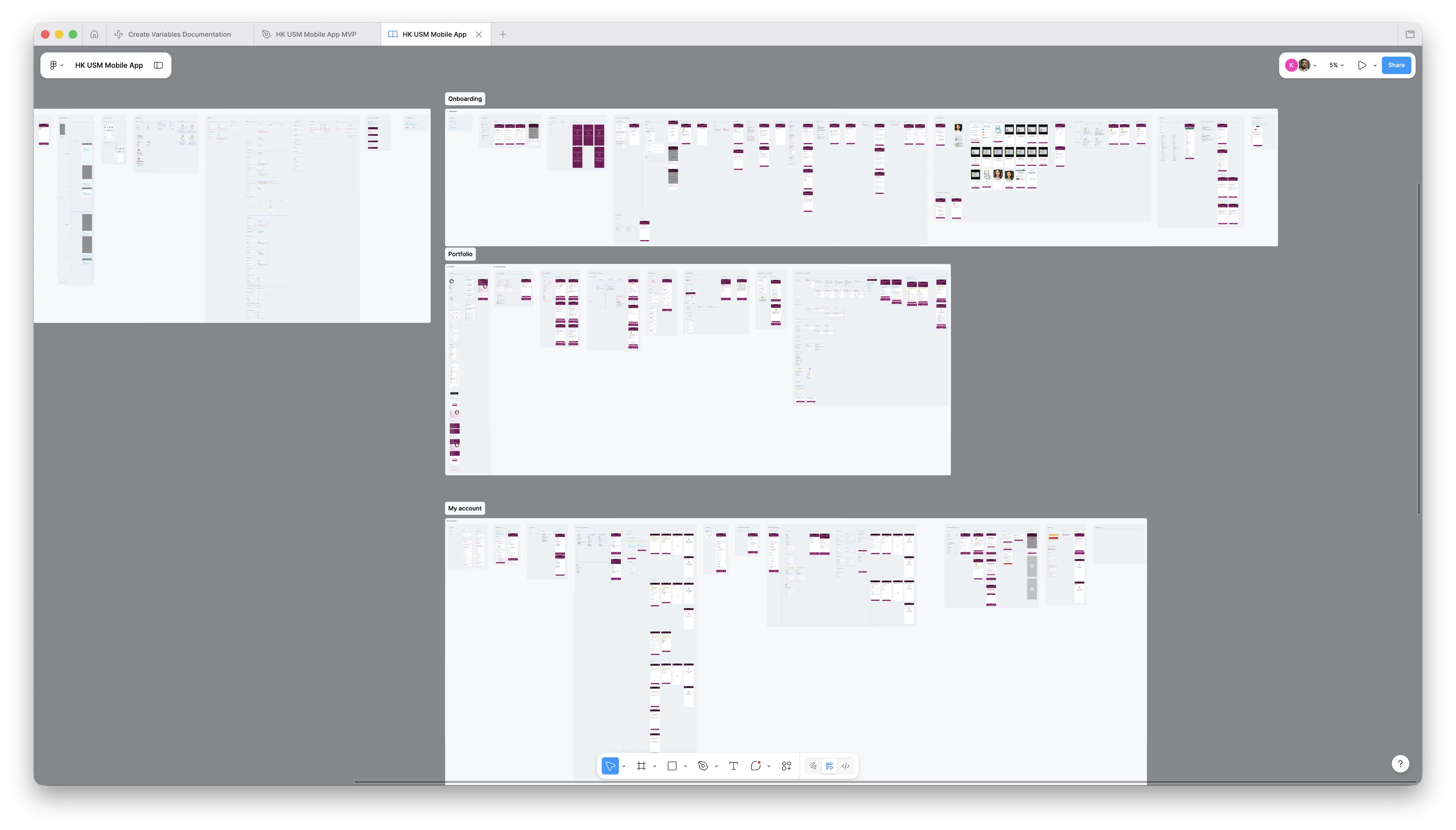
UX work on Investor Centre HK was organised around individual features. Over time, this created a product where shared journeys cannibalized each other, incremental changes caused regressions elsewhere, and no one could confidently say which artefacts were still current.
I'd built systems thinking independently across four years at BSO Digital, where I had no design lead to learn from. This engagement was the chance to apply that thinking at scale inside a regulated, multi-discipline global product, under real delivery pressure.
Features had evolved independently, without a shared structural framework. Journeys fragmented across specs. Regressions went undetected until they surfaced in delivery. Designers, engineers, BAs and testers were all working from artefacts with no clear source of truth and no reliable way to know what was still current.
The deeper issue wasn't the tools. It was how UX thinking was structured.
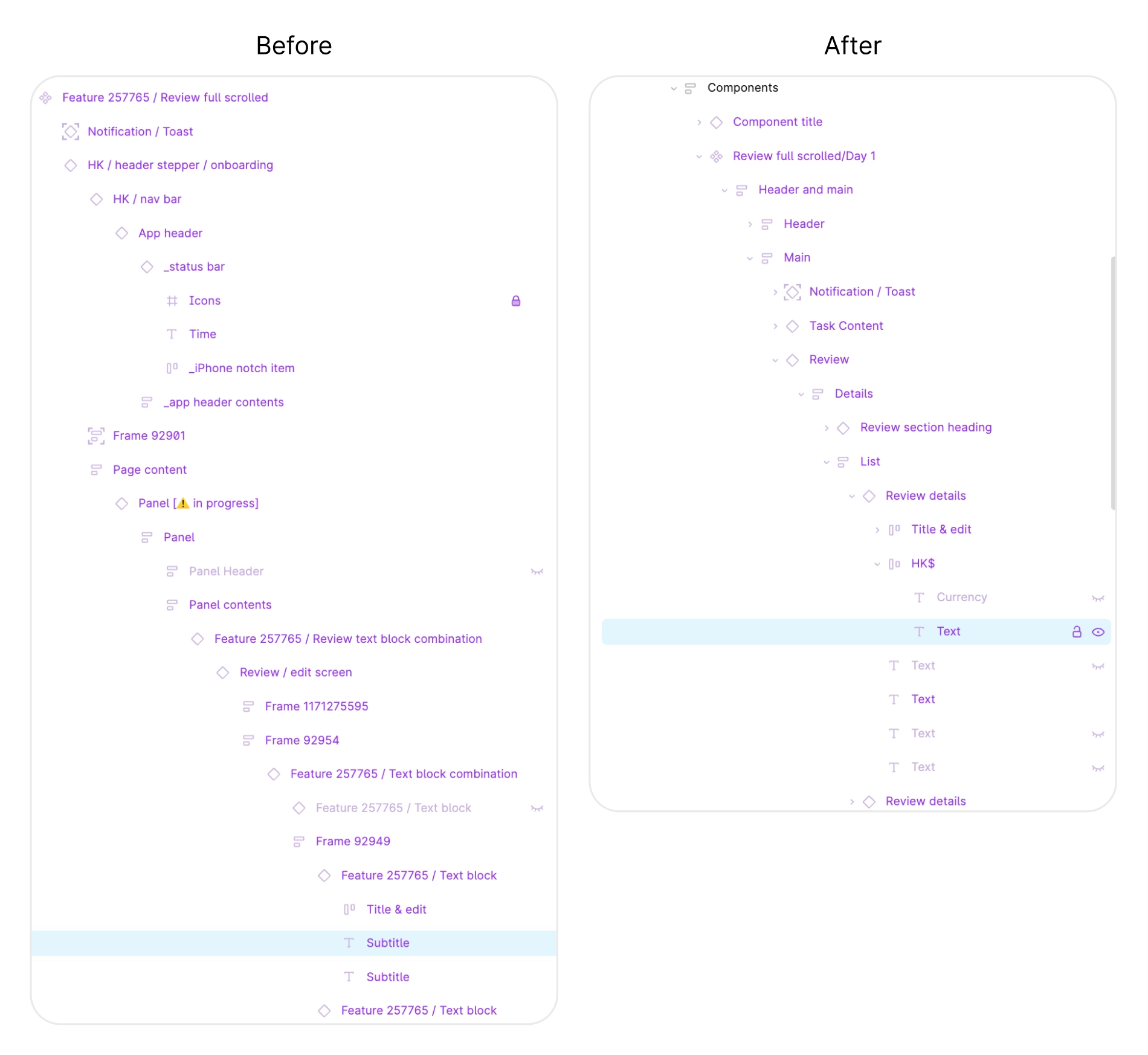
Before: manually hunting content through deeply nested component overrides. After: clear component intent and separation of concerns.
This work needed to happen under real-world constraints:
Because the issues were largely “backstage,” progress was harder to measure and communicate. Any change needed to be incremental and low-risk.
Rather than waiting for a process change that required buy-in I didn't yet have, I started with what I could control: the Figma files.
I restructured the product file around full journeys rather than isolated features separating system-level flows from feature execution, and creating consistently annotated components that engineers and BAs could navigate without a designer present. This also meant rebuilding how content was handled inside components.
Previously, placeholder data was typed directly into deeply nested overrides meaning every new feature required hunting through multiple layers to keep content consistent. I built a variable system from scratch that mirrored the real product data model: shareholder types, dual address structures, document variants, banking visibility rules, and language formats informed by months of reading requirements and sitting in BA sessions. You can't structure data you don't understand. Domain knowledge was a prerequisite.
The result: artefacts that behaved like the actual product. Update one variable, it propagates everywhere.
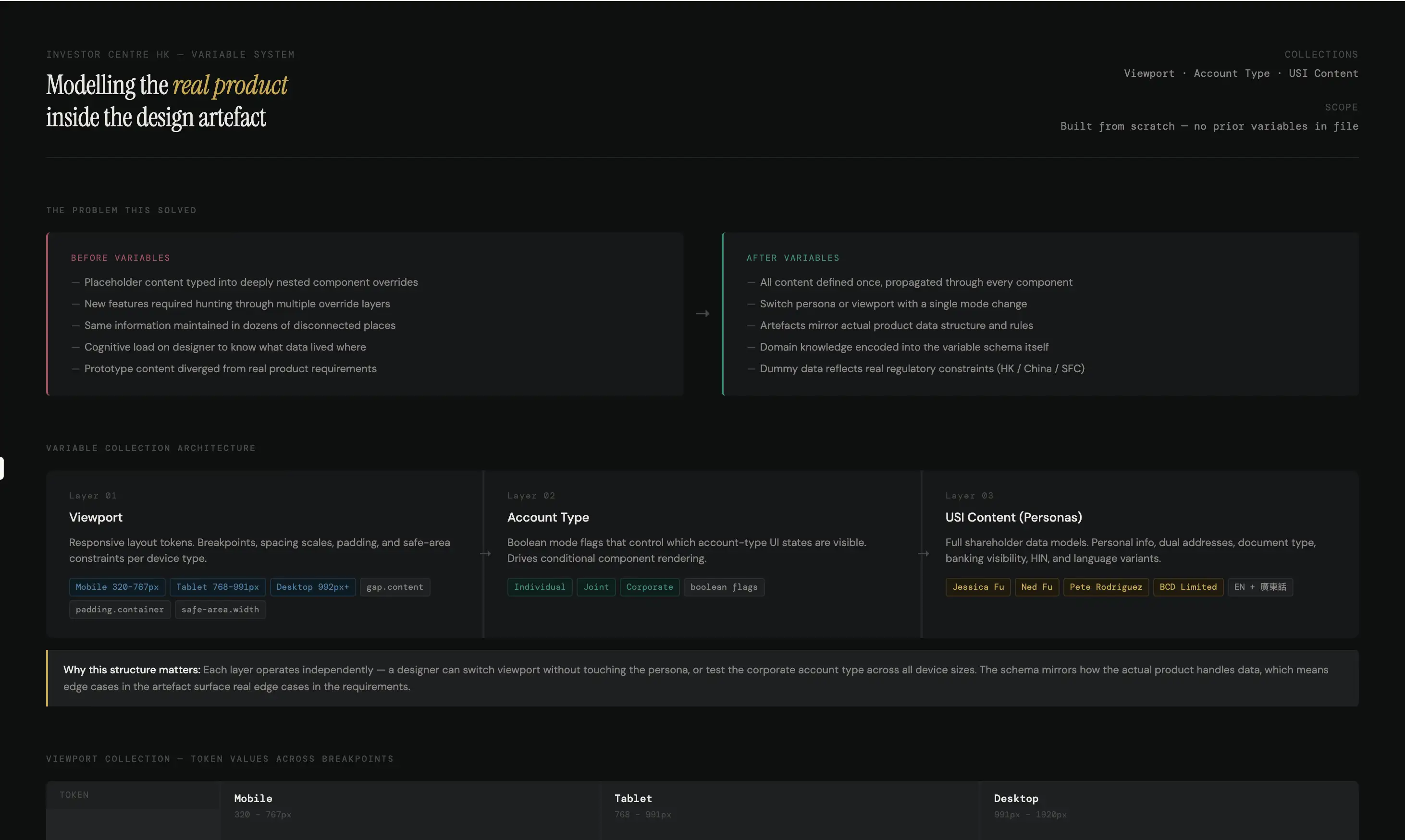
Variable system built from scratch. Content collections structured to mirror real USI data, enabling single-source updates across all artefacts.
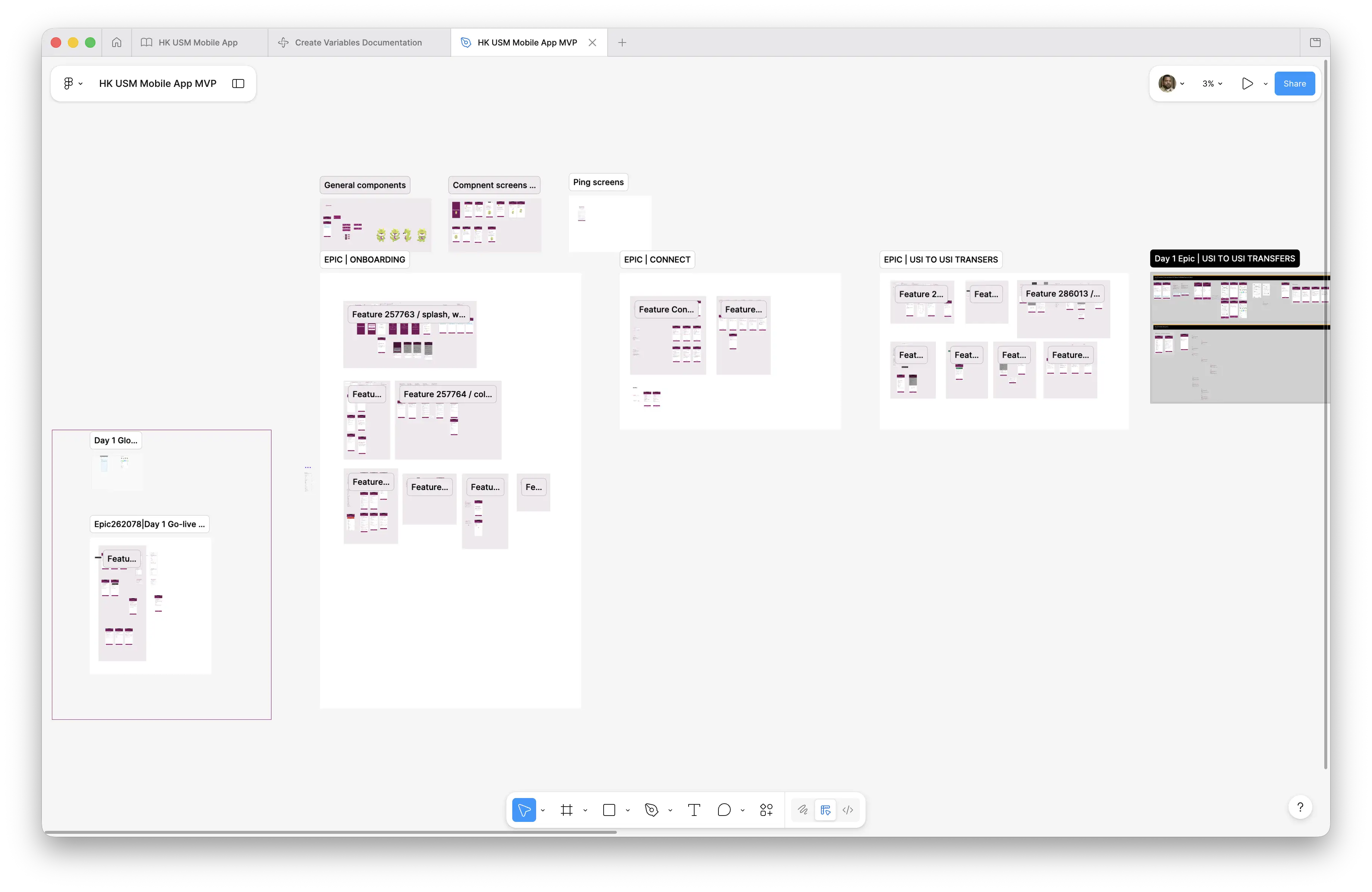
Figma file restructured around epics and full journeys rather than isolated feature specs.
With reliable artefacts in place, I could do something the previous structure hadn't supported: map the product as a connected system.
I worked across the IX flows in Miro, tracing every journey from Login through Onboarding, Connect Holdings, USI to USI Transfers, Withdrawals, Dividend Election, Documents, and Account management. This wasn't separate from the Figma work it was enabled by it. Clear, navigable components made the cross-journey logic visible. Gaps and conflicts that had been hidden inside feature specs became apparent once the full flow was visible end to end.
Engineers reported smoother handoffs. BAs could iterate on customer flows faster. An agency designer who joined the team noted they couldn't imagine how things had functioned previously.
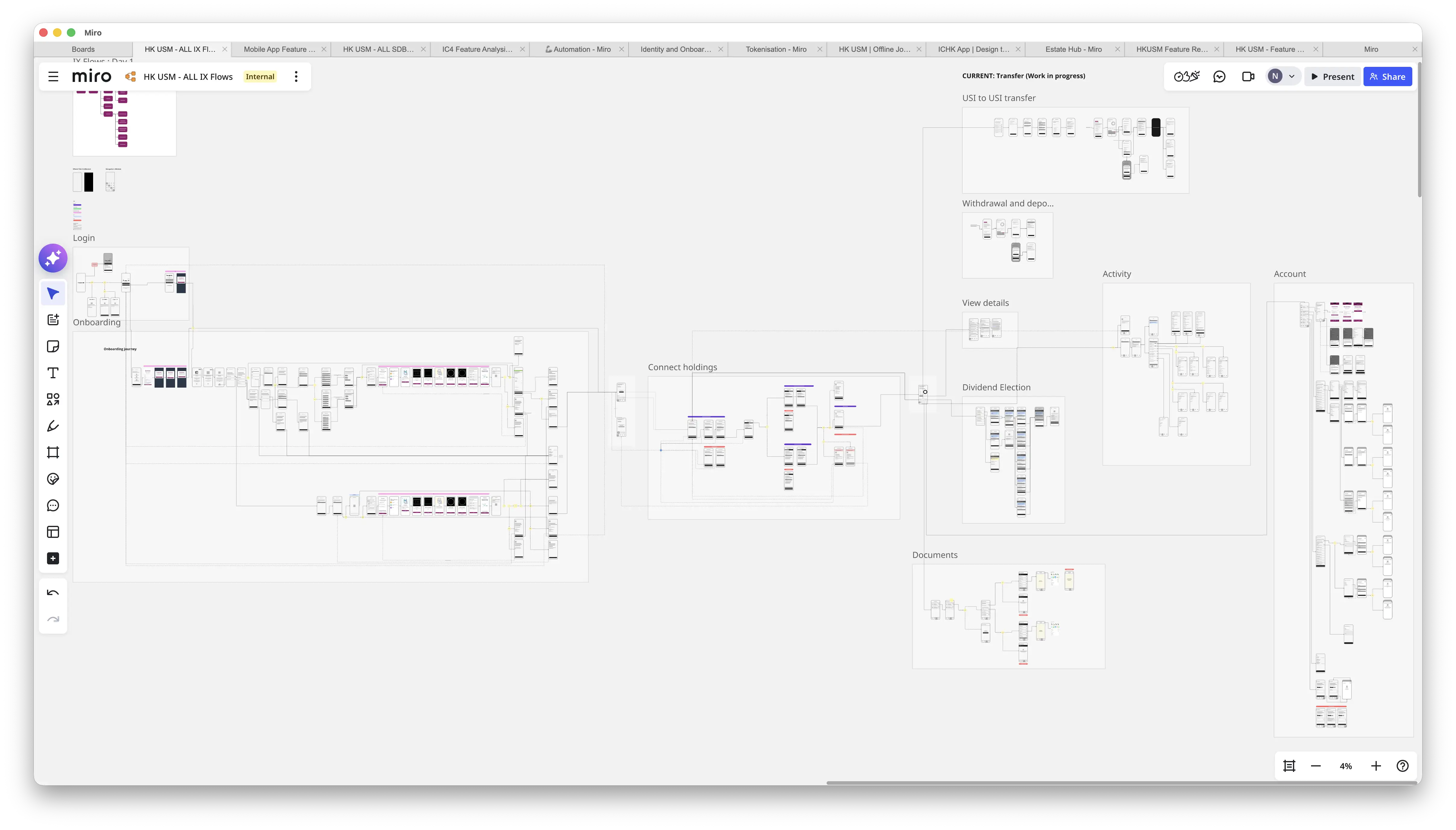
After: Left to right clear paths including decision points, unhappy paths and restartable journeys
The IX flows gave us a shared map of how the product worked. The next step still in progress is translating that map into service blueprints that cross the boundary between customer experience and back-of-house process.
Blueprints are being structured around launch milestones rather than features, beginning with the Connect journey on Day 1. This approach means each blueprint is anchored to a real delivery moment, making it useful for engineering, QA, and business analysis rather than just design.
The persona and discovery work iterated across three rounds in Miro, covering ten investor segments mapped against USM pain points, gain points, and estimated market share also feeds into this layer, grounding the blueprint decisions in who is actually being designed for.
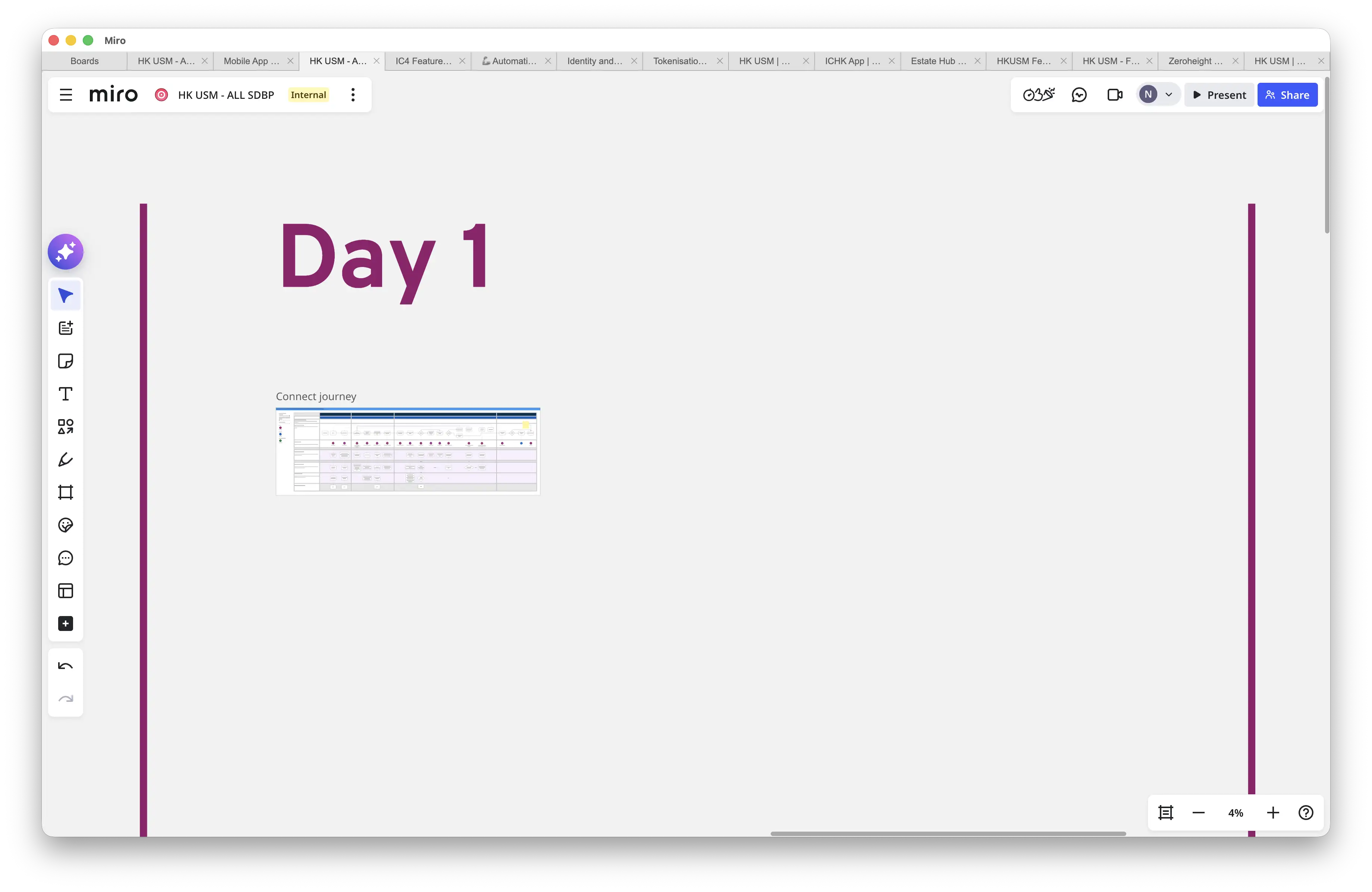
Service blueprints structured around launch milestones. Work in progress. Connect journey, Day 1.
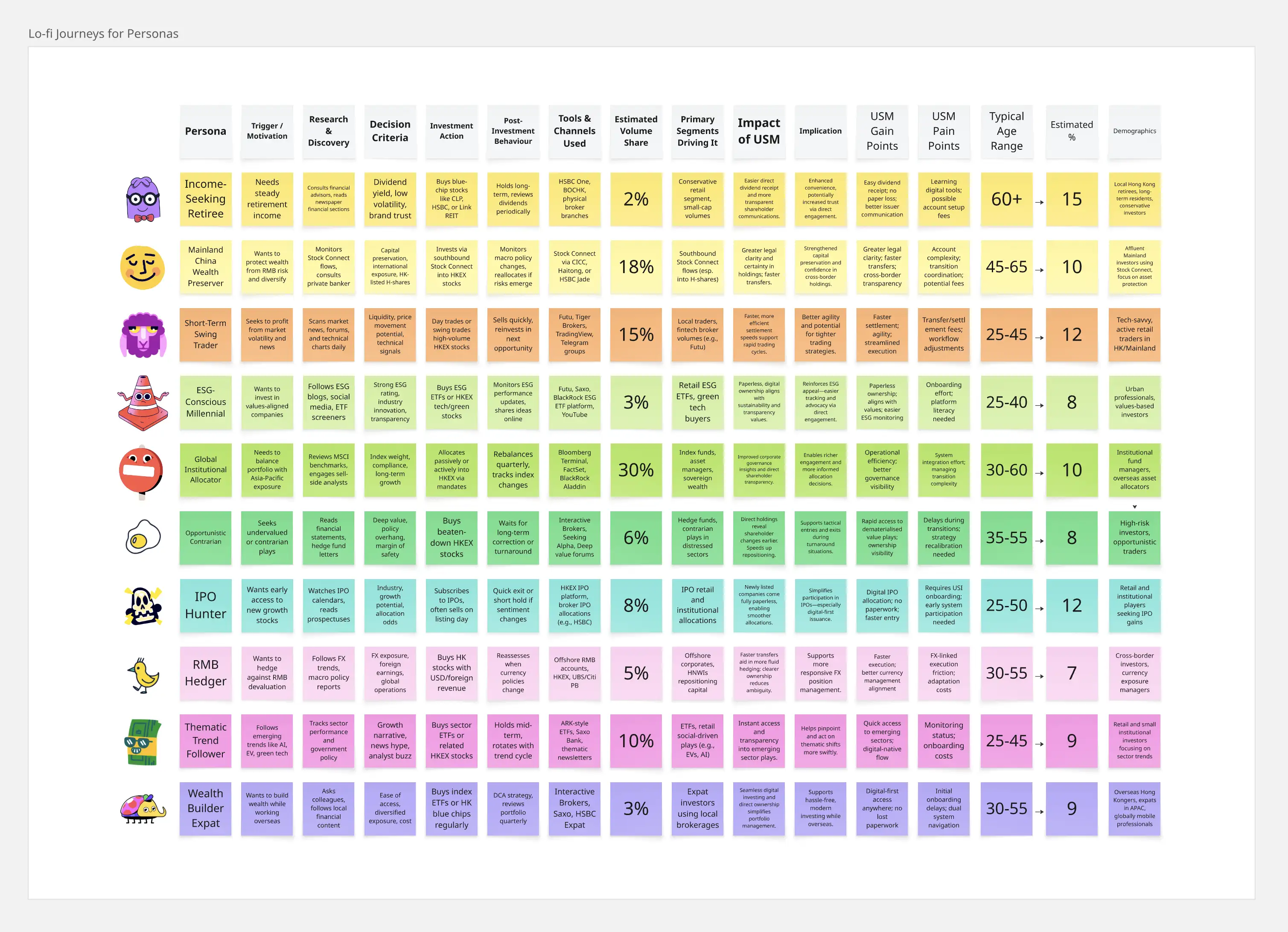
Investor segments mapped across USM pain points, gain points, and market share — informing blueprint and journey decisions.
Influence here was entirely relationship-based. Stakeholders were focused on delivery. Agency designers were optimised for tickets. Internal designers were cautious about changing ways of working under pressure.
Progress required explaining fundamentals before introducing systems thinking walking people through why artefacts were structured differently, and holding steady when BA frustration surfaced as feature specs exposed deeper structural issues. Over time, the quality of conversations improved. Better artefacts enabled better questions.
The self-taught foundation from BSO building systems thinking without a design lead, from first principles turned out to be exactly the preparation this engagement required.